This article is a mobile-friendly adaptation of the piece I wrote for my sister site, Hooked-on: "Berluti Alessandro." If the subject interests you, I encourage you to visit the original on Hooked-on as well.
Images on this site are formatted for mobile in a vertical layout, which can appear oversized on a desktop screen. If that bothers you, the Hooked-on version may be easier to read.
[ https://en.hooked-on01.com ]
This site, inter-est, rebuilds content from my WordPress site Hooked-on using Drupal — and uses Drupal's features to enable cross-referencing between articles and browsing by related content. My hope is that visitors find their curiosity — their interest — expanding as they move through the site.
Sustainability has become a word everyone uses. Passing on my Berluti Alessandro to a younger colleague gave me a different way of thinking about it — a glimpse of what this old maison has been doing quietly, as a matter of course, since long before the word existed.
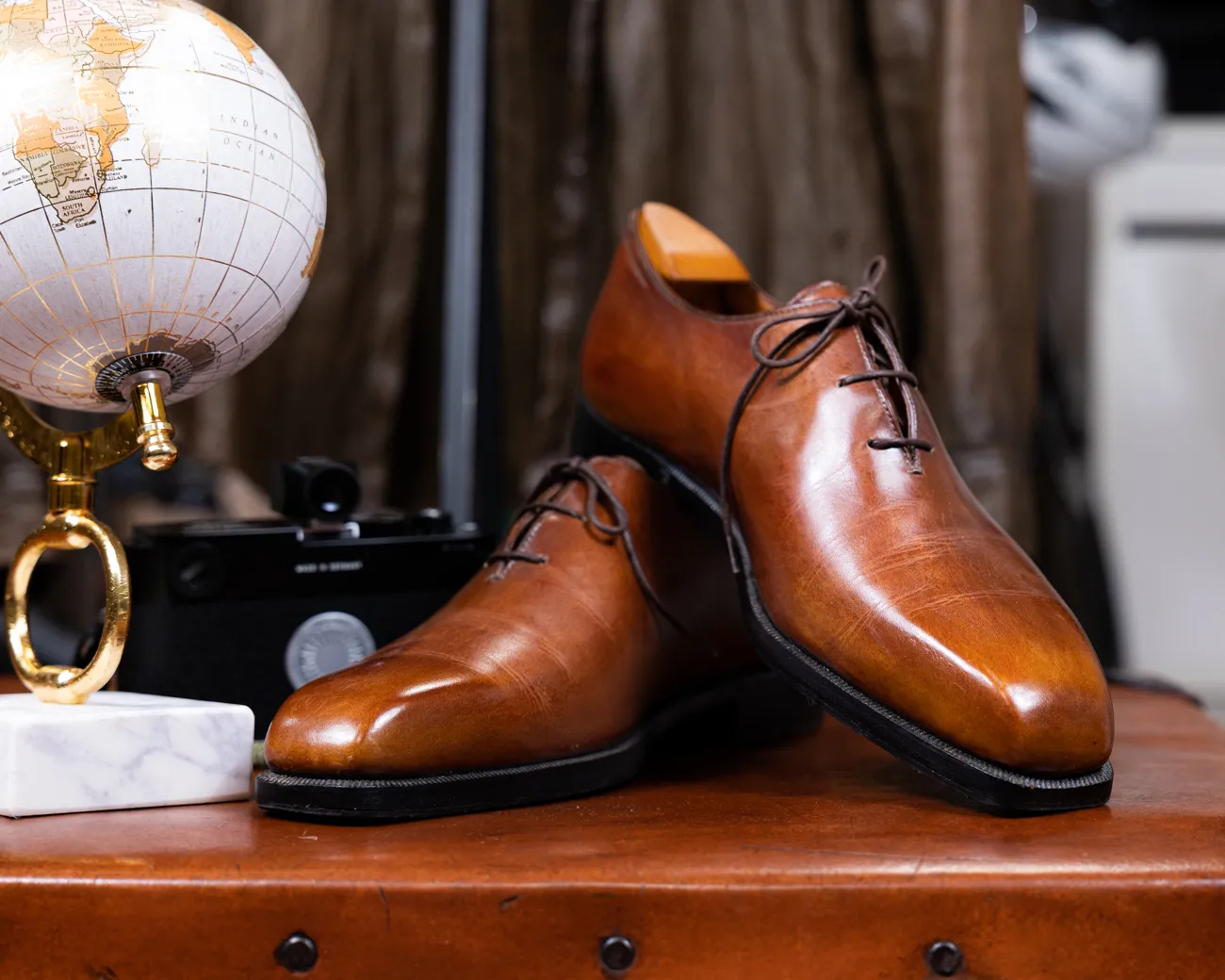
Berluti Alessandro.
The Alessandro is an Oxford — a formal shoe, typically associated with suits. But Berluti's patine, the hand-applied colour that is the signature of the house, produces tones that no other dress shoe can replicate. The result is a shoe that works not only with a suit, but with blue jeans.
I bought mine in 2005 at the Aoyama flagship. At the time, I wore them with suits — pieces from Belvest, and a Kiton from Taille à Taille — and with the premium denim that was current then: Stitches, Paper Denim & Cloth. The shape is distinctive, and at first glance it reads as demanding. In practice, it goes with a wide range of things. It's the shoe I reached for when I wanted to dress up without trying too hard.
With Berluti, the purchase itself takes time. Sizing is done in store, and the patine — the colour worked into the leather by hand — is applied in France before the shoe is shipped. From purchase to receipt takes roughly a month. When the shoes arrive, you return to the store to collect them, and the staff walk you through care and maintenance, including how to reapply the colour over time. Customer registration happens at the point of purchase.
A small aside: Berluti has its own way of tying laces. The standard bow uses a single loop; the Berluti knot uses two, wrapped around each other. The result is a bow that holds securely and almost never comes undone. They teach you this when you collect the shoes.
The Alessandro became one of those shoes with real memories attached — worn with different things over the years, always finding its place.
John Lobb.
My taste in shoes has always run toward something slightly substantial — a shape with a bit of weight to it. The shoes I keep for suits are three pairs of John Lobb, all open-lacing Derby constructions with double soles: the Barros, the Derby, and the Chambord.
All three were bought around 2000. More than twenty years later, I still have them — less worn now, but properly cared for and stored. John Lobb is a shoe I feel strongly about, but it is an orthodox gentleman's shoe in the best sense, and I wear it with suits and sharply creased trousers, not with jeans.
※ The John Lobb shoes deserve their own article — I'll cover them properly when the occasion arises.
Things that are loved for a long time.
As the years pass, casual dressing tends toward comfort. Jeans and sneakers most of the time; John Lobb when there's a suit involved. In that shift, the Alessandro gradually found less use. I kept it well — cleaned, stored properly — but it spent more and more time in the wardrobe.
Then a younger colleague of mine, someone with a genuine eye for clothes, mentioned Berluti in conversation. It occurred to me that the Alessandro might suit him. I suggested he try them on — shoes are personal, and fit matters — and they worked. I passed the shoes on to him: the Alessandro, a Dandy Sauvage loafer I had from an earlier period, and a belt I'd kept to match both pairs.
Berluti Alessandro.
The Alessandro I bought twenty years ago. The patine has softened with time, but the leather itself shows no deterioration.
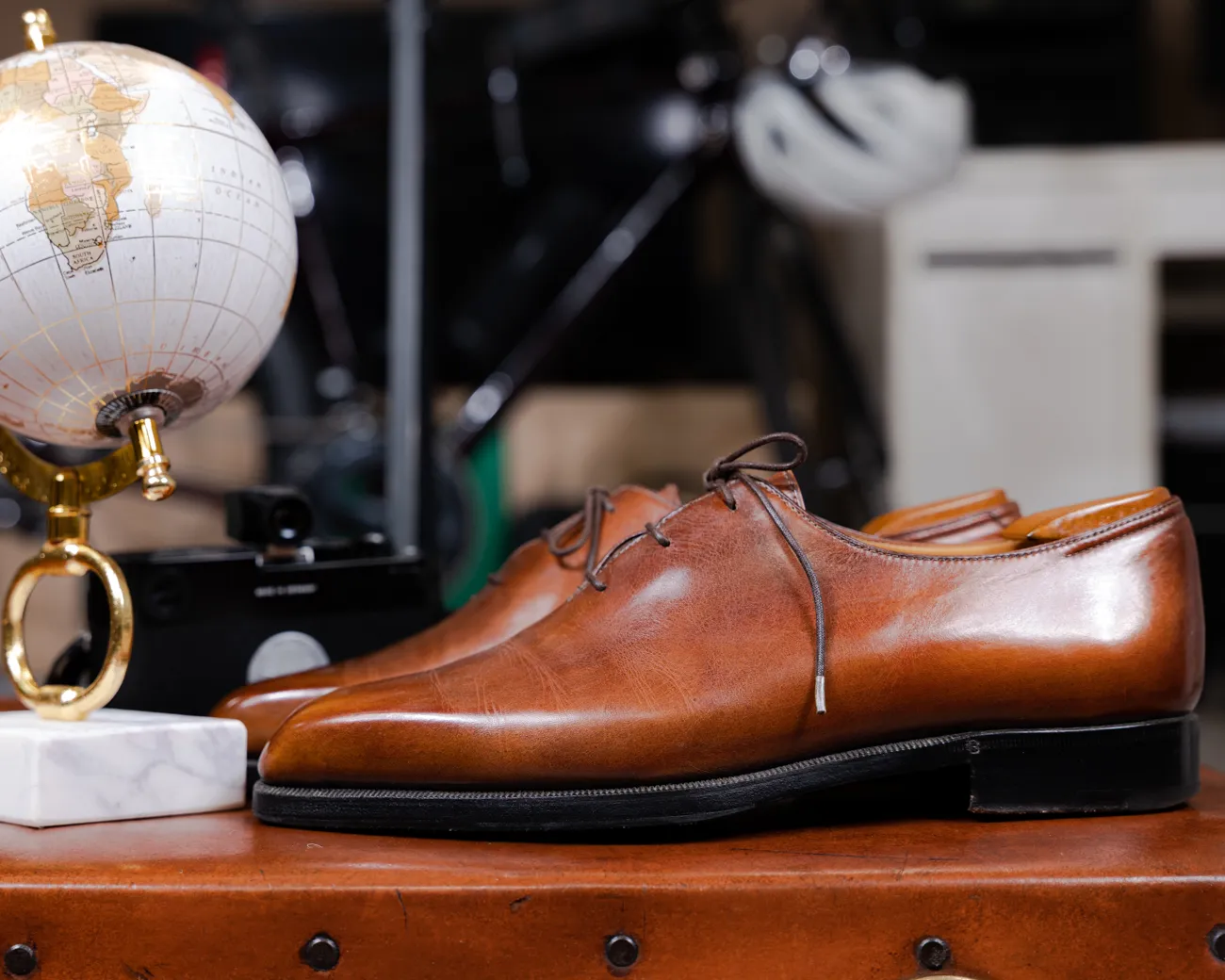
Berluti Alessandro
John Lobb Barros
The Barros, bought twenty-five years ago. Some natural aging, but no real wear.
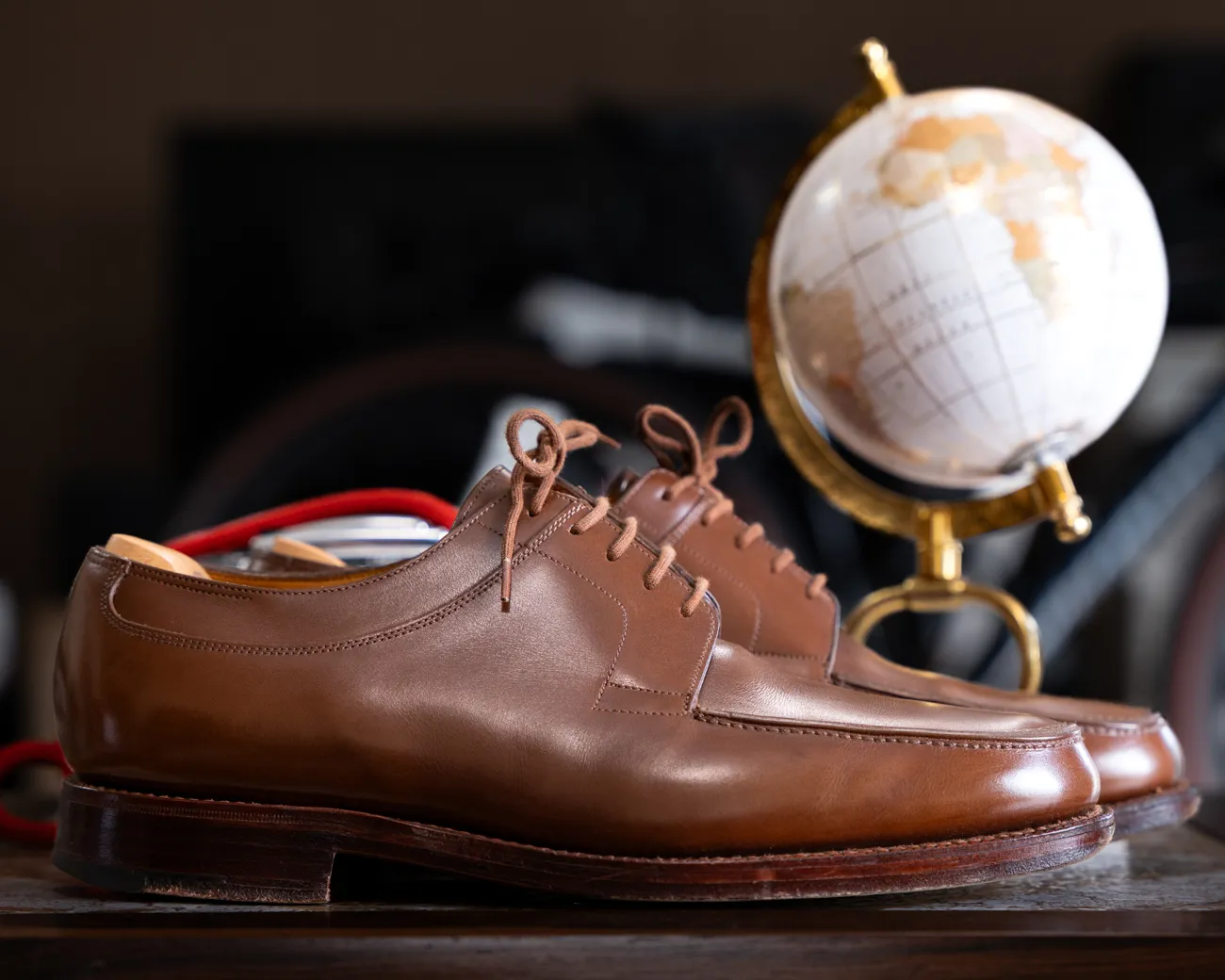
John Lobb Barros
Berluti Ginza Store.
After passing the shoes on, I stopped into the Berluti Ginza store to buy some care products to send along with them. I mentioned to the staff member who helped me that I wanted to update the customer registration for a pair purchased more than fifteen years earlier. I gave my name and the phone number I'd registered at the time — and the record was still there.
I explained the situation: I'd passed the shoes to someone else and wanted to transfer the registration. The staff took note. That day I left without completing the process — but on a later visit, when I brought my colleague in to register, everything had been properly passed on. The full context of what I'd explained was already in the record, and the new registration was completed that day.
At the same time, the staff walked my colleague through shoe care, colour reapplication, and resoling — everything he'd need to know going forward. And since we'd made the trip, they invited us to look around: shoes, leather goods, and the ready-to-wear the brand now carries, which hadn't existed when I first bought mine. A proper visit, handled with care at every stage.
Conclude.
What struck me in all of this was the chain of things that had happened, quietly and without any particular fuss.
A shoe bought twenty years ago was something someone else wanted. It was passed on, and received with real appreciation, and is now being worn properly. The house that made it had kept the customer record intact across those twenty years. When told the shoe had changed hands, they created a new registration for the new owner and extended the same after-care as if he had bought it himself.
That sequence maps exactly onto what people mean when they talk about sustainability — except Berluti wasn't doing it as a policy or a statement. They were doing it as a matter of course, because that is simply how they operate. A well-made object, cared for and passed on, supported by a house that takes the long view on what it means to look after a customer. Nothing is wasted. Nothing is discarded. The shoe keeps going.
The Alessandro is a little more flamboyant than where my taste sits now. But one of the staff suggested that for the vintage denim and casual styling I described, a suede Andy — their loafer, available to order — might be worth considering. They showed me samples. For something that expensive, the decision isn't quick. But thinking about wearing it well for years and passing it on eventually — the interest is there.
My colleague, too, has been thinking about a black Andy. Perhaps there's an order in both our futures. What this whole episode confirmed is something I already believed: objects you genuinely care for, and wear for years, and eventually pass on — those are the ones worth having. That conviction is part of what led me to build this site.
Purchasing Store.
The store I visited for this article is the Berluti Ginza store.
The atmosphere is formal and the entrance can feel a little imposing — but once you're inside and talking with the staff, they are courteous and easy to speak with, explaining the products without pressure. If you're there to look seriously, you'll be shown to a sofa and offered still water, orange juice, or sparkling water, and given time to browse at your own pace.
The shoes are what the house is known for, and the patine — that layered, hand-applied colour — has a quality entirely its own. No other shoemaker produces anything quite like it. The bags and wallets are equally well considered: pieces with the gravity appropriate to a mature man's wardrobe, and a quiet wit that is distinctly French. Because the house started with shoes, leather is at the centre of everything — and the quality of the leather goods puts them a level above most comparable brands.
Ready-to-wear has become a serious part of the offering, and the footwear now includes sneakers alongside the dress styles. The approach is classic with a considered twist — not chasing trends, which means the pieces sit naturally alongside what you already own. The leather jackets in autumn and winter are worth particular attention: the leather expertise that defines the house is evident in every style, and the quality of the hide alone gives each piece a distinction that doesn't need anything else.
The range is menswear, so it's not a place for shopping with a partner. But the interior has a Parisian atmosphere that's genuinely pleasant to spend time in. If you find yourself in Ginza on a day off, it's worth a visit.