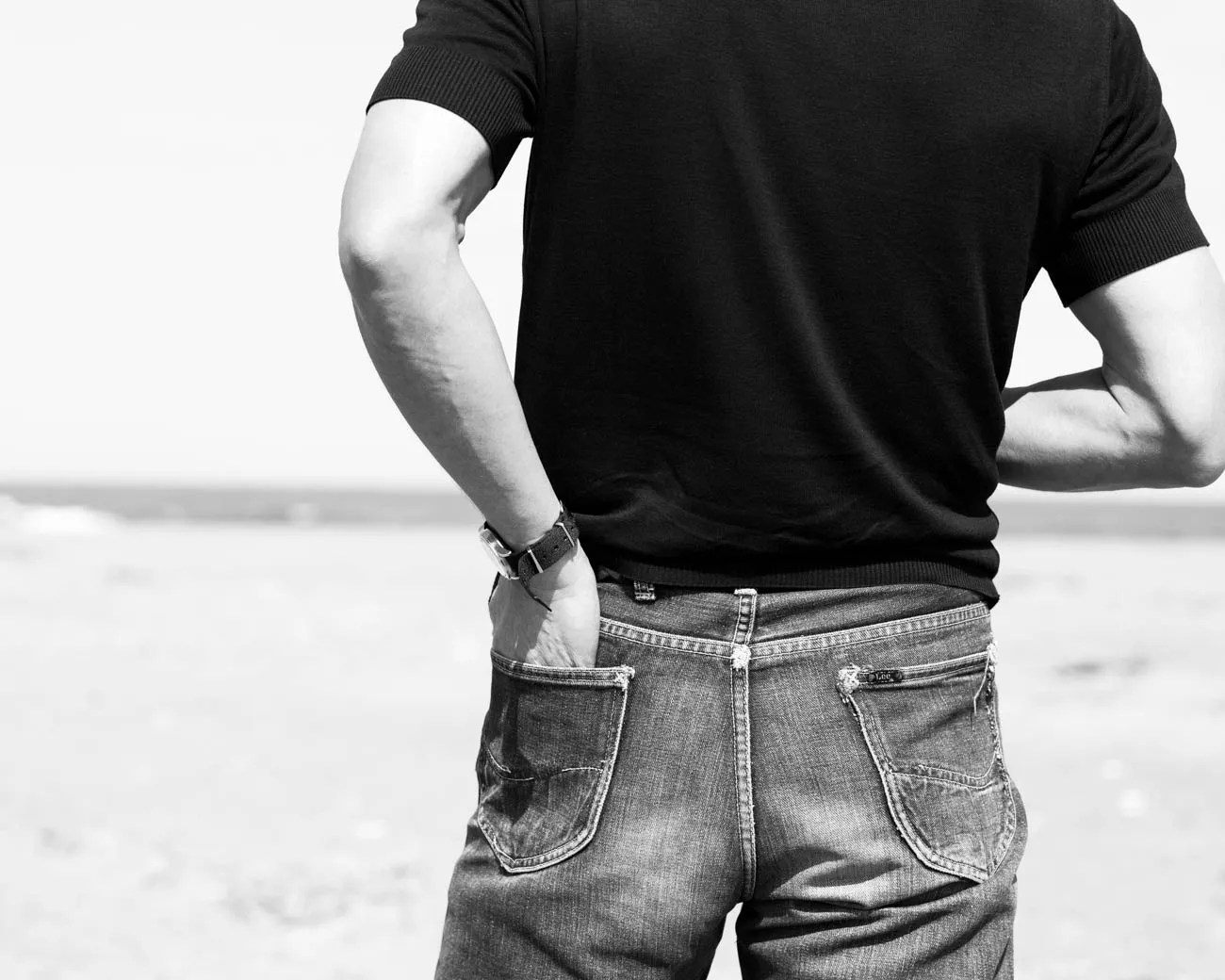
The Lee 101-Z is the pair that introduced me — a lifelong Levi's 501 devotee — to the appeal of a zipper fly and a trouser-like silhouette. A 1950s model known to collectors as the Center Black Tag, it was originally built for cowboys: a high rise, generous straight cut. James Dean wore it in Rebel Without a Cause, though in practice it carries a quiet, unassuming character that goes with nearly everything.
The Z in 101-Z stands for zipper fly. The B in 101-B stands for button fly.
Lee
Levi's evolved from workwear made for industrial laborers — factory workers, miners. Lee, by contrast, evolved from workwear made for cowboys: ranch hands and farmworkers.
Where the 501 was designed as a practical, standard-fit straight leg for working on foot, the 101 was built with riding in mind. The high rise and the generous silhouette from hip to hem are there because the original wearer was expected to be on a horse.
The denim itself is different from Levi's as well. Where Levi's fades to a clean, bright blue, Lee holds its color longer, aging toward a greenish blue.
Rather than the whisker-heavy, contoured fades you see on Levi's, the 101-Z wears more quietly — just the knees and seat showing any real color loss. That understated aging is, for me, its greatest appeal. The high rise and trouser-like comfort make it a pair I reach for without thinking.
Styling
The 101-Z pairs well with military field jackets, and I find myself reaching for the M47, M43, and M65 with it regularly.
From early spring through autumn, I pair it with the single-layer construction of the M47 or M43, over a simple, fitted tee in white or black. In autumn and winter, I layer a sweater underneath and wear it with the M65.
The wide thigh and clean straight fall work well under a military outer, and pairing it with heavy boots gives the whole combination a harder edge.
Tom Ford T-shirt
In spring and summer, I often pair it with a black Tom Ford Henley — made in viscose, with a feel closer to knitwear than a standard tee.

At 33 inches the leg is on the longer side, so I lean toward shoes with some heel height. In summer, the Loro Piana white sole — soft and visually light — gets a lot of wear with this pair.
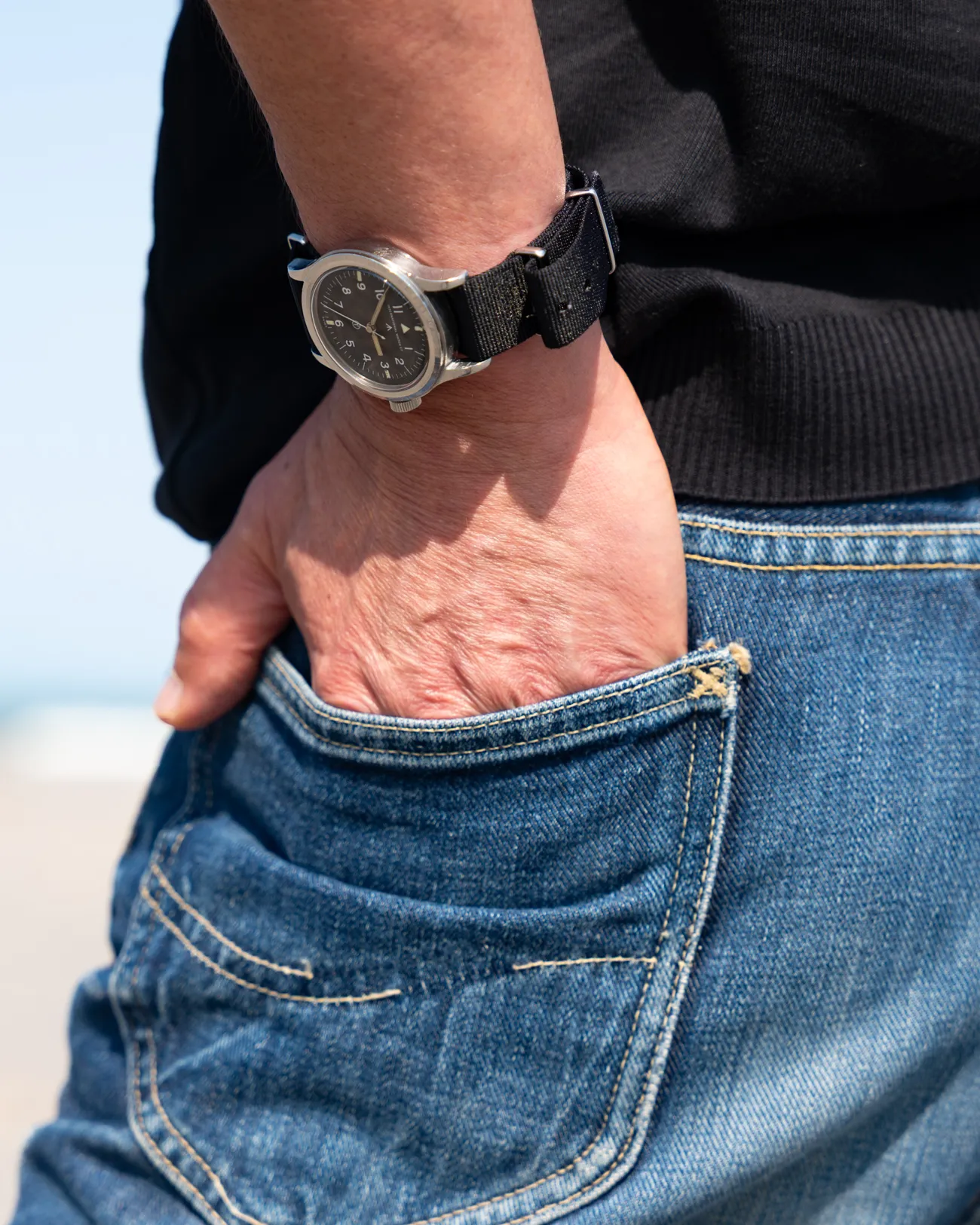
Levi's, to me, calls for a Rolex. With Lee I tend to reach for the IWC Mark 11 RAF instead.
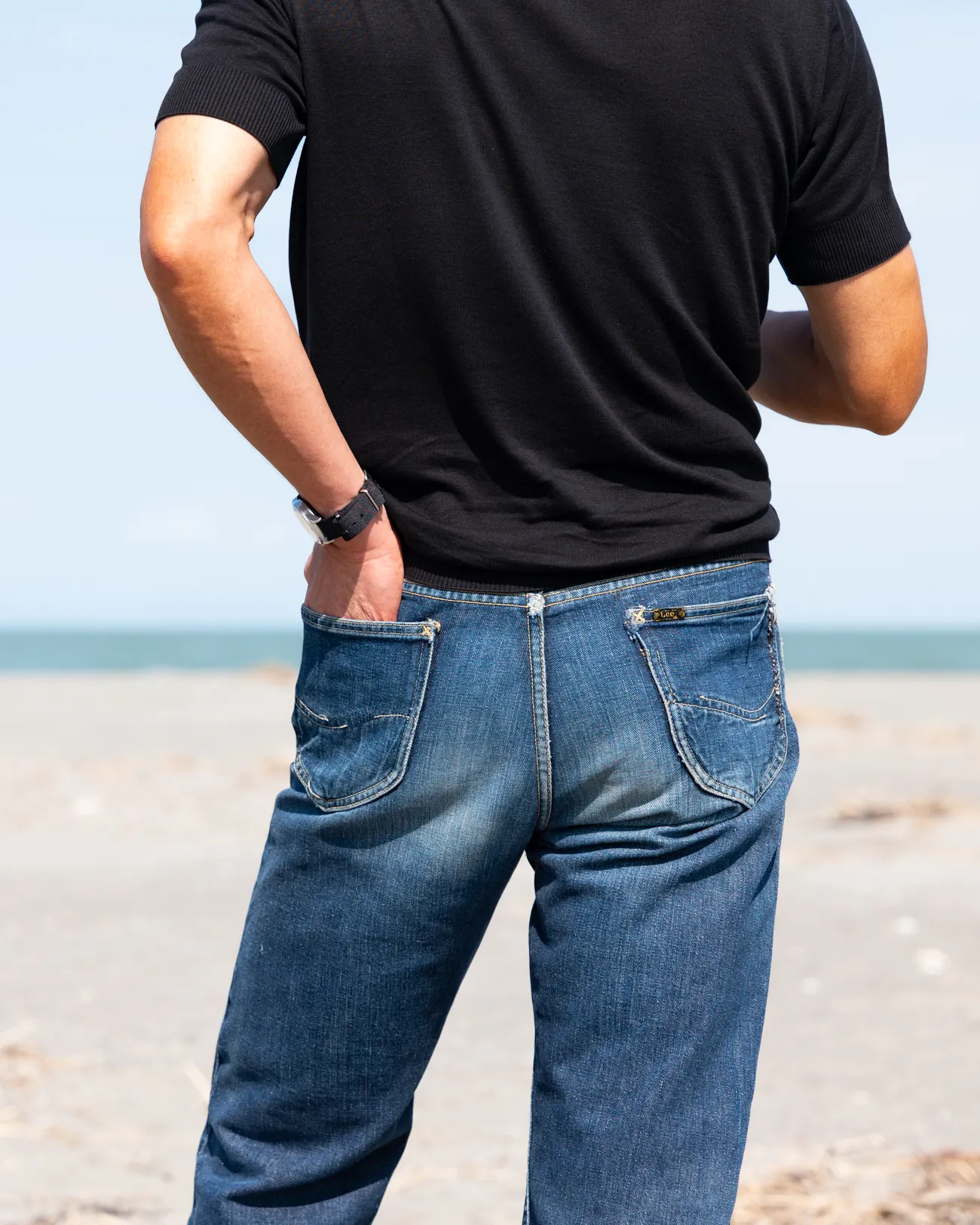
Built for cowboys, the 101-Z fades characteristically at the seat and inner thigh — right where a rider wears through the cloth first.
M47 Field Jacket
The M47 is a fairly structured jacket, and it works well here. I wear the M43 with it too, but I find the 101-Z — still holding a lot of its color — sits better against the M47's twill construction and tighter build. The M43 pairs better with something more faded, so I tend to reach for a 1960s 502 there instead.
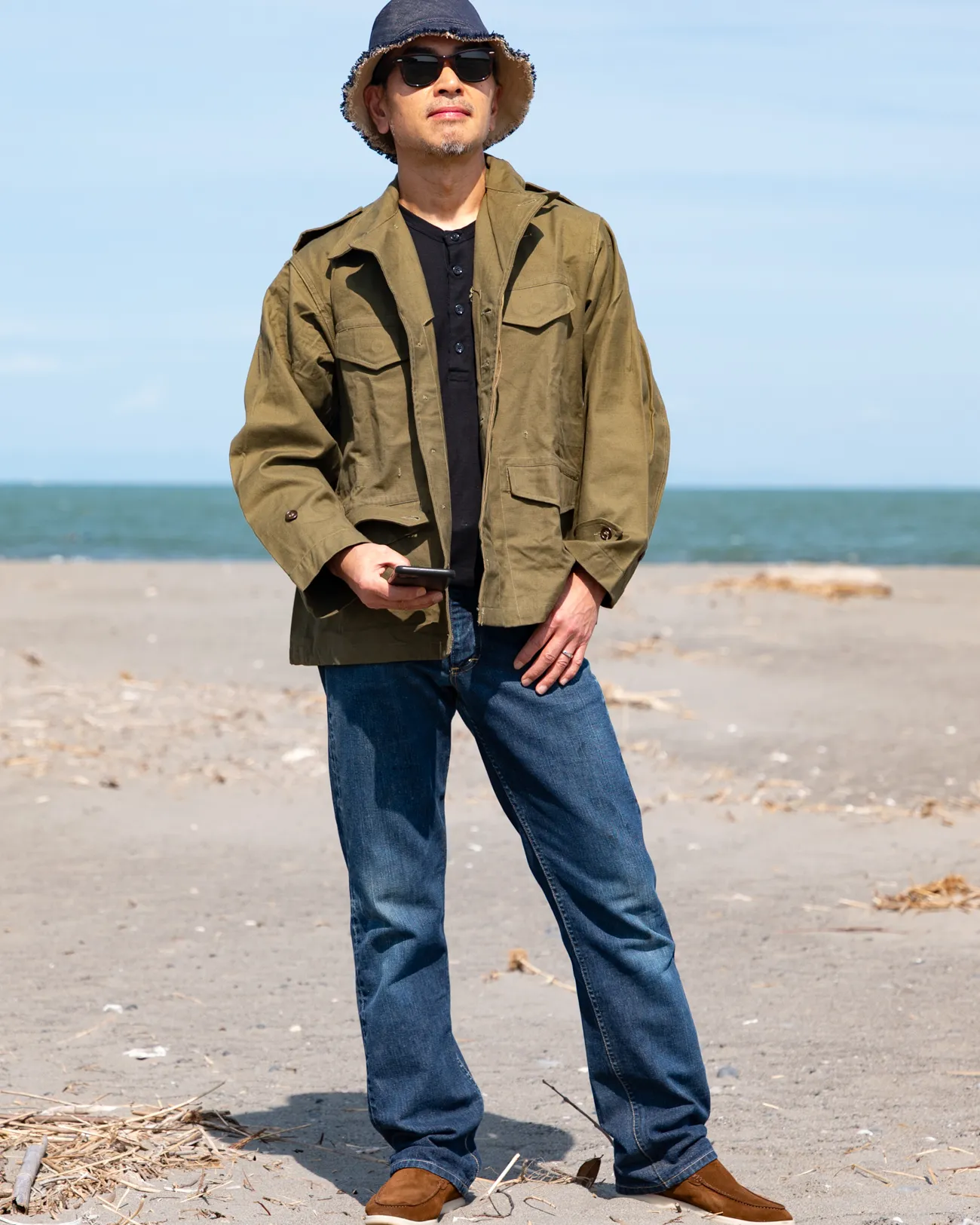
From spring through autumn, the M47 gets the most wear with this pair.
M65 Field Jacket
The M65 is military outerwear at its most canonical — a jacket that goes with almost anything. The wide armholes and heavy lining make it the right choice when you're wearing a real sweater underneath in winter.
Its origins are in actual military issue, designed for freedom of movement, with a generous silhouette — which pairs naturally with the wide-thighed 101-Z.
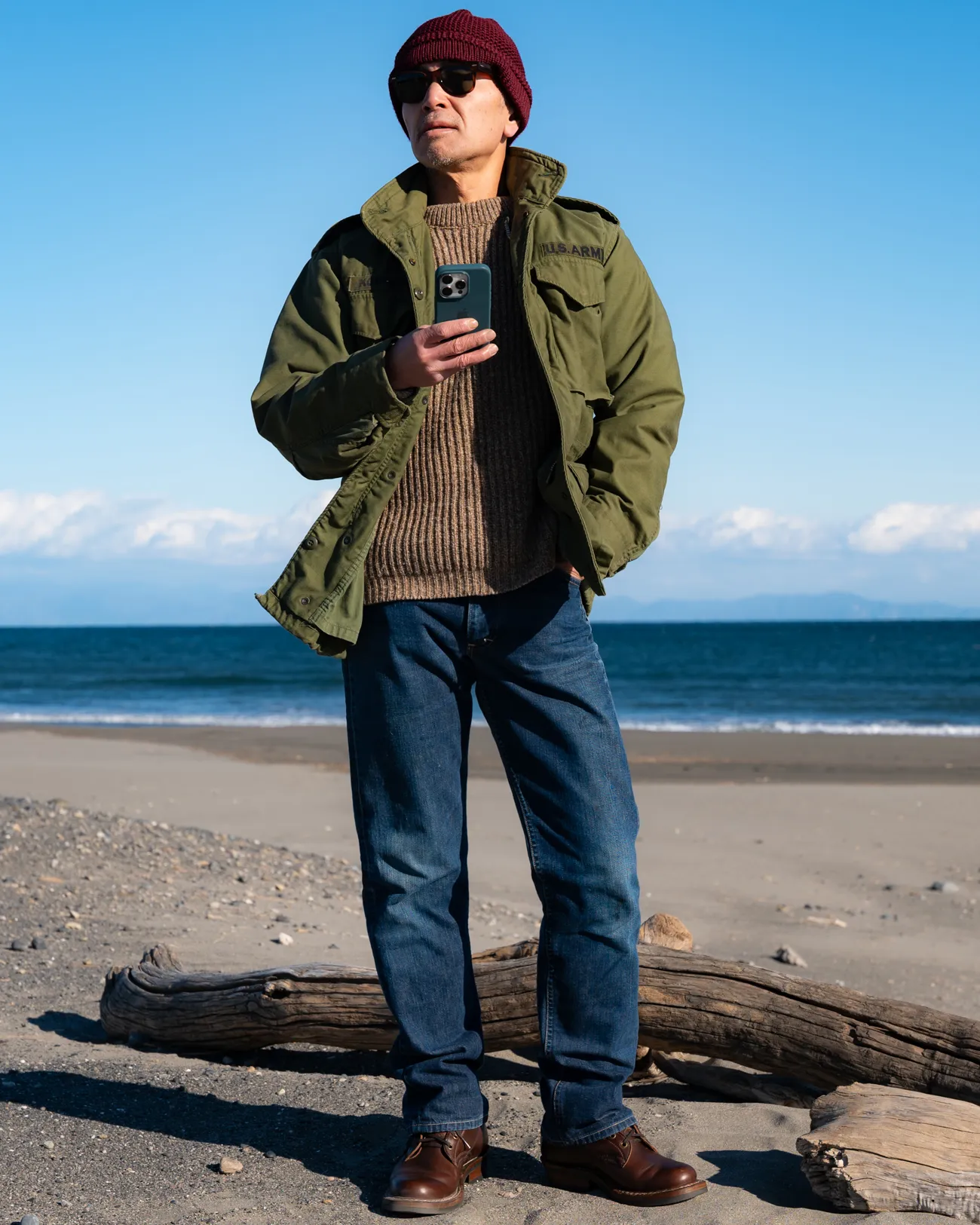
In winter I wear it over a heavy sweater with the M65 on top. For footwear, something with real volume — a substantial boot — balances the proportions well.
The high rise and trouser-like ease of movement are what define the 101-Z as a wearing experience.
Details.
- Center Black Tag (1950s)
- Six belt loops
- Waist 30 in. / Length 33 in.
- Stitched repair on the rear pocket
- Color is still deep.
Coordination.
- Field Jacket: M47, size 44
- Field Jacket: M65, Medium Short
- Henley-neck knit: Tom Ford, size 46
- Denim: Lee 101-Z, 1950s, Waist 30 in. / Length 33 in.
- Shoes: Loro Piana, White Sole
- Boots: White's
- Hat: Borsalino
- Hat: Real McCoy's
- Watch: IWC Mark 11, 1940s
- Sunglasses: Ray-Ban Wayfarer, 1990s (Bausch & Lomb)
Care
I wash my vintage jeans myself. I turn them inside out, fill the bathtub with water, dissolve a denim-specific detergent — or a gentle alternative like Acron or Emal — and work through the fabric with light pressing motions before leaving them to soak for a bit.
I rinse them in the tub, press out the water with a towel, then lay them flat to dry in the shade. When towel-pressing isn't enough, I fold them into a mesh laundry bag and give them a short spin in the machine before hanging them.
I don't wear my vintage jeans every day, so the washing frequency is low. But the advice to avoid washing in order to preserve the fade is, I think, counterproductive — oils and grease left in the fabric cause more damage over time than washing does. I wash them when I notice they need it.
Conclude.
I came across the Lee 101-Z 50s while looking for a 501ZXX — a chance find that turned into one of my most-worn pairs. Its qualities reveal themselves slowly, and the attachment grows with wear. There's nothing iconic about its details or its fade, and that restraint — the fact that it doesn't announce itself — is, I've come to feel, its greatest virtue. The trouser-like construction makes it noticeably more comfortable and relaxed than any Levi's I own, which is no small part of why I keep reaching for it.
Purchasing Store.
This article is a mobile-friendly version of the Lee 101-Z 50's Center Black Tag piece I wrote for my sister site, Hooked-on. If you're interested, I'd encourage you to check out the original there as well.
The images here are optimized for mobile with a vertical layout, which can appear quite large on a desktop. If that bothers you, the Hooked-on version may suit you better.
[ https://en.hooked-on01.com ]
This site, interest, is a rebuild of the content from Hooked-on — originally written in WordPress — restructured in Drupal, with Drupal's features used to build reverse-lookup browsing and article relationships. My hope is that visitors leave with a broader sense of what interest — curiosity — can mean.
- Shinichiro Takeda -